
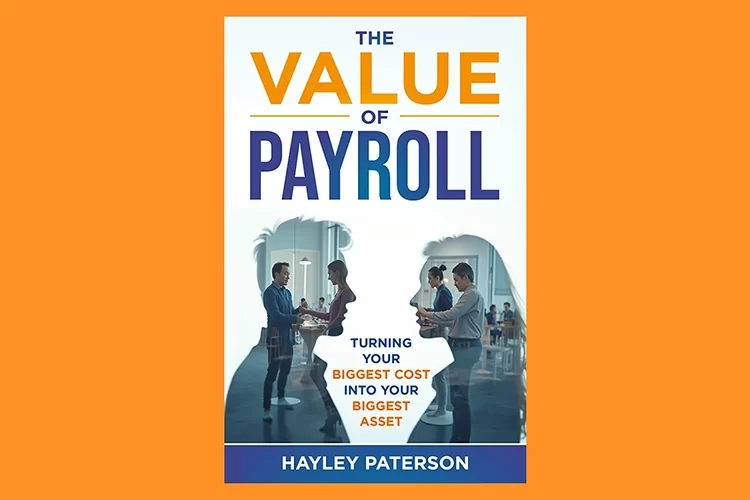
The Value of Payroll
For many employers, payroll sits quietly in the background of the business. Something that needs to be done, needs to be correct, and ideally needs to run without drama. But what if payroll isn’t just an administrative function? What if it’s actually one of the most powerful levers you have to influence culture, efficiency, and profitability?
That’s the central idea behind my first book, The Value of Payroll. The book invites you to rethink payroll, not as a monthly obligation, but as a strategic asset built on what I call the 3Ps of payroll: Process, People, and Profit.
Process: the backbone of consistency
The first P is Process, and this is where many payroll challenges originate. When processes are unclear, inconsistent, or overly dependent on one individual, risk increases. Errors creep in, deadlines become stressful, and payroll turns into something the business fears each month.
The Value of Payroll breaks this down in practical terms. I look at how you can create payroll processes that are reliable, documented, and scalable. Not complicated systems, just clear steps that ensure information flows correctly from managers to payroll, from payroll to finance, and from the business to its employees.
Strong payroll processes don’t just reduce mistakes. They free up time, reduce stress, and allow leaders to focus on growth rather than firefighting. You often discover that improving payroll processes has a ripple effect across other parts of the organisation too, strengthening communication and accountability.
People: payroll is personal
At its heart, payroll is about people. It’s how your employees experience fairness, trust, and stability within your business. When pay is accurate, on time, and clearly communicated, employees feel secure. When it isn’t, confidence drops quickly.
My book explores how payroll shapes the employee experience more than many leaders realise. A payslip isn’t just a financial document; it’s a signal. It tells employees whether the business is organised, transparent, and dependable.
By focusing on the People aspect of payroll, you begin to see pay as part of their culture. Questions shift from “Have we run payroll?” to “What does our payroll say about how we treat our team?” That subtle change in perspective can transform how payroll is prioritised within the business.
Profit: the overlooked payroll lever
The third P is Profit, and is often the most surprising. Many employers don’t immediately connect payroll with profitability, yet payroll is usually the largest cost in the business.
My book shows how payroll data, when understood properly, becomes a powerful management tool. It reveals trends in overtime, absence, staffing levels, and pay progression. It highlights where inefficiencies exist and where better planning could reduce unnecessary costs.
Rather than seeing payroll as a record of what’s already happened, The Value of Payroll encourages you to use it as insight for what should happen next. That shift turns payroll from a historical exercise into a forward-looking business tool.
Why this matters to you
What makes The Value of Payroll stand out is its practical, real-world tone. I don’t speak in technical jargon or assume specialist knowledge. Instead, I connects payroll to the everyday realities employers face, managing teams, controlling costs, building trust, and planning for growth.
I help you recognise that payroll is never just about numbers. It’s about how people feel, how the business operates, and how decisions are made.
By understanding the 3Ps, Process, People, and Profit, you gain a framework that makes payroll clearer, more intentional, and far more valuable to your business.
If payroll currently feels like a task you need to get through each month, this book will help you see it differently. It shows how payroll, when understood and managed well, becomes a foundation for stability, culture, and sustainable growth.
Because payroll isn’t just something your business does.
It’s something your business runs on.
Head over to Amazon to grab your copy